New Paper and Newspaper Article about a climate action intervention at the University of Amsterdam
A climate action intervention at UvA increased students’ emotional engagement with the climate crisis and their actions.
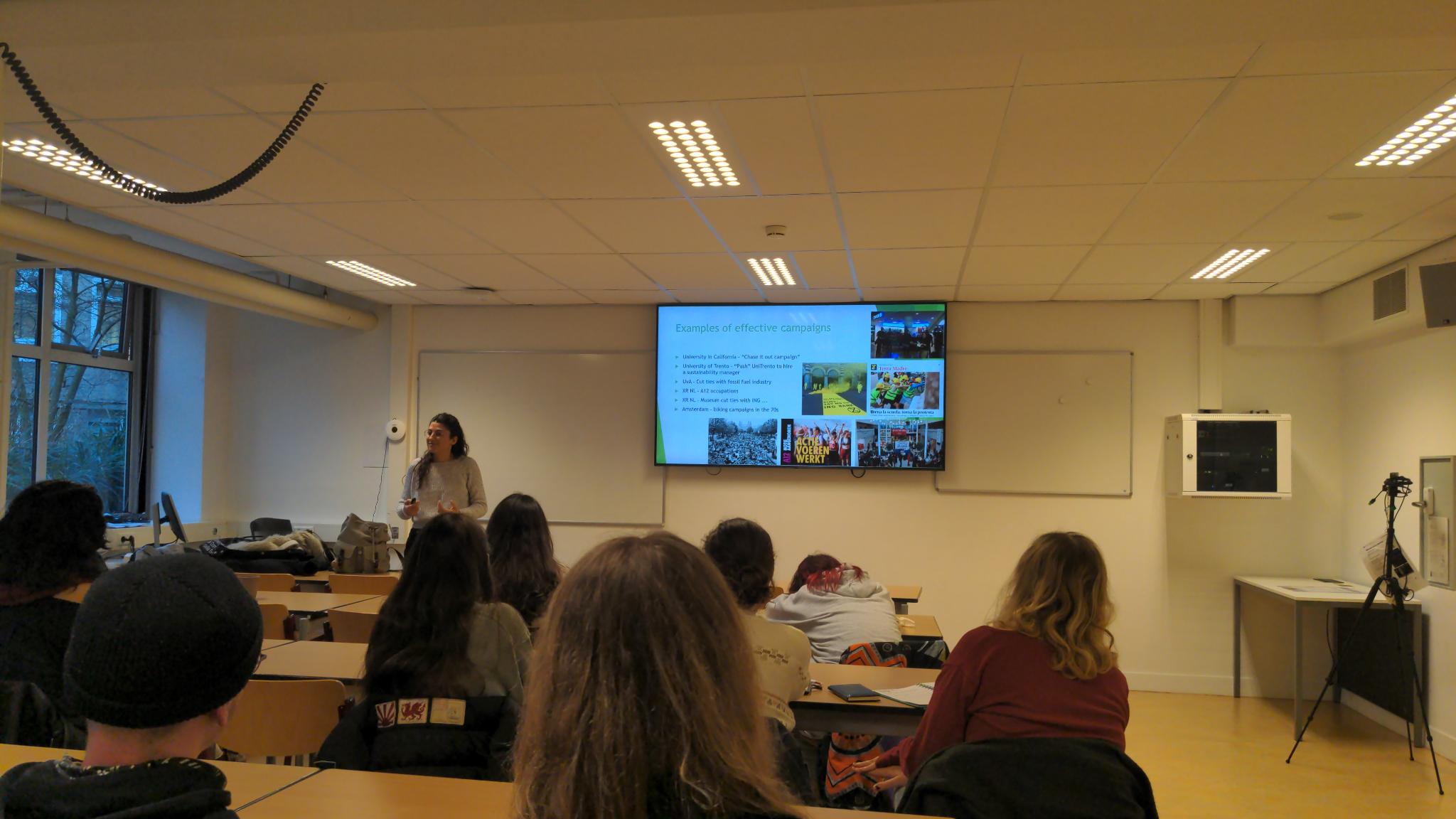
UvA students participated in a six-week intervention aimed at strengthening the psychological mechanisms linked to climate action and increasing real-life collective action. Anna Castiglione and AICE member Anna Sach were interviewed recently by Folia about their study.
Four psychological mechanisms increased significantly following the intervention:
- Emotional engagement with climate change
- Collective efficacy — the belief that we can make a difference together
- A bottom-up theory of change — the idea that grassroots action can drive wider systemic change
- Climate appraisal — how people evaluate and interpret the climate crisis
Civic engagement, climate advocacy, and activism
But the findings went beyond changes in psychological measures. The participants also showed increases in civic engagement, climate advocacy, and activism for the climate.
This brings important learnings for climate educators, communicators, and activists. Effective climate communication should do more than explain climate collapse. It should help people engage emotionally, recognise their collective power, and see how individual and grassroots initiatives can contribute to broader societal transformation.
These findings offer encouraging evidence that thoughtfully designed interventions can motivate people to take collective climate action.