Members
If you are a scholar in the Amsterdam area who would like to join AICE, please contact Milica Nikolic.
-
Bert Bakker
I am an Associate Professor at the Amsterdam School of Communication Research (University of Amsterdam). My work focuses upon contemporary issues such social polarization and populism. In particular, I study the psychological roots of citizens’ political beliefs with the most attention to the role of personality and emotions. Besides, I am motivated to work as transparent as possible and stimulate others to do the same.
-
Michael Boiger
Michael Boiger is an Assistant Professor in the Department of Social Psychology at the University of Amsterdam. His research focuses on the meanings and functions of emotion from a cultural and relational perspective. Currently, he investigates interpersonal emotional dynamics during intercultural encounters, with a particular interest in two areas: (1) how intercultural couples navigate challenges related to emotional understanding and attunement, and (2) how therapists can effectively engage with emotions in intercultural therapeutic settings. In addition to his academic work, Michael practices as an emotion-focused therapist in private practice.
-
YongQi Cong
YongQi Cong is a postdoctoral researcher at the University of Amsterdam. Her research broadly examines how emotions are perceived, expressed, and understood across cultures and across development.
Her work has investigated cultural similarities and differences in emotion communication and appraisal, the perception of posed and spontaneous facial expressions, and the role of visual attention in cross-cultural emotion recognition. She uses a range of experimental methods and research designs, including eye-tracking, longitudinal studies, and meta-analysis, and works with diverse samples, including immigrants, culturally mixed individuals, and adoptees. Her current research focuses on how emotion categories develop in early childhood. In this work, she combines qualitative and quantitative methods to examine how children come to understand and differentiate emotions, and how this development is shaped by their social and cultural environments.
-
Corine Dijk
Dr. Corine Dijk is an assistant professor of at the Department of Clinical Psychology at the University of Amsterdam. My research centres on interpersonal processes in psychopathology, mainly in social anxiety disorder. For example, I try to study if socially anxious individuals differ in their emotional responses from non-anxious individuals during social interactions (e.g., blush more or are less inclined to mimic other’s emotions); and if this influences how they are judged by others. Also, I try to examine which cognitive mechanisms drive the differences in social and emotional behaviour. For example, do negative interpretations or strict beliefs about what is appropriate behaviour cause socially anxious individuals to behave differently?
-
Allard Feddes
Allard R. Feddes is interested in the role of emotions in intergroup contexts. Specifically, Allard has investigated the role of emotions in intergroup conflicts (i.e., the role of emotions in radicalisation processes leading to terrorism), formation of attitudes (i.e., how does humour interact with threat in regard to attitudes towards outgroups) and helping behaviour (i.e., to what extent do emotions play a role in volunteering to help refugees). Currently, Allard is involved in a research project focused on the extent to which reporting experiences with LGBTI-related discrimination and aggression to the police influences (emotional) well- being on the long term.
- Esmei Fehling
-
Agneta Fischer
Prof.dr. Agneta Fischer is currently Professor in Emotions and Affective Processes in the Social Psychology Group of the University of Amsterdam, and director of the Psychology Research Institute. She has been president of the International Society of Research on Emotion (ISRE, 2004-2009), and she is currently the coordinator of CERE (Consortium of Emotion Researchers in Europe) and the chair of the Dutch Association of Social Psychology (ASPO). She is co-editor of Cognition and Emotion, and consulting editor in a number of other international journals. Her broad research interest is emotions in social contexts, and she has published in the domain of facial expressions of emotion, emotional mimicry, culture and gender differences in emotions, embodiment, and the social functions of emotions, in particular anger and contempt.
-
Changyu Jing
Changyu Jing is a PhD candidate in the Department of Social Psychology at the University of Amsterdam. Under the supervision of Dr. Disa Sauter and Dr. Suzanne Oosterwijk, she is working on a project investigating the motivations behind climate change information-seeking behaviors. Her current research focuses on identifying key factors, such as emotional responses and personal relevance, that explain individuals’ engagement with environmental messages. She also explores whether people’s approach to these messages may, in turn, influence their underlying motivations.
-
Roza Kamiloglu
I am an Assistant Professor at VU Amsterdam. My research focuses on the production and perception of nonverbal vocalisations, such as laughter, screams, and sighs. I employ a multidisciplinary approach, utilising computational methods like machine learning and conducting comparative studies across different cultures and between humans and other species. I completed my PhD at the University of Amsterdam (UvA), where I investigated the vocal expressions of a wide range of positive emotions, including amusement, triumph, pride, and tenderness. This research has laid the foundation for my ongoing work in this field.
-
Gerben van Kleef
Prof. dr. Gerben A. van Kleef is Full Professor in the Social Psychology department of the University of Amsterdam. His primary research interests revolve around emotion, power, norm violations, social influence, group processes, and conflict. In studying these topics, he investigates fundamental mechanisms underlying human behavior and explores their implications for organizations and society. In doing so, he combines social-psychological approaches with insights from various other disciplines, including behavioral economics, law, biology, and evolutionary science. His work on emotion focuses on the interpersonal effects of discrete emotional expressions across domains of life, including personal relationships, conflict and negotiation, team work, leadership, coaching, and sports.
-
Jurriaan te Koppele

I am lecturer and researcher at Utrecht University. I have a background in emotion and motivation research and hold a PhD in Marketing and Consumer Behaviour from Wageningen University. In my dissertation, I demonstrated that emotions do not always drive hedonic choices; rather, when people are able to choose their situations, emotions often motivate goal-directed behavior.
My current research focuses on how emotions and situational choices can be leveraged to stimulate virtuous behaviours, like making healthier and more sustainable choices. For example, by strengthening self-control. By investigating the motivational role of emotions in shaping decisions, I aim to contribute to interventions and strategies that promote well-being and sustainable living.
I teach a variety of courses on behaviour change, At Social, Health, and Organisational Psychology (SHOP), with a focus on problem-based learning and a strong emphasis on linking scientific insights from academia to real-world challenges in industry and society (community-engaged learning).
-
Thomas Gazetti
I am a postdoctoral researcher at the University of Amsterdam, within an ERC-funded project led by Milica Nikolić and Disa Sauter. My research combines multiple methods to examine how complex emotions emerge early in life and how their development varies across cultures. I also collaborate on an SNSF-funded project led by Fabrice Clément on affective social learning throughout development.
I received my PhD in Cognitive Science from Central European University (Vienna), where I studied how observing others’ emotional expressions shapes cultural learning and decision-making. Part of my PhD research was conducted at the Emotions and Social Relations Lab at the University of Oxford, where I worked with Brian Parkinson.
-
Liesbeth Mann
Liesbeth Mann is a lecturer and researcher at the University of Amsterdam. She obtained her PhD in 2017 at the same university studying the emotion of humiliation in interpersonal, intra- and intergroup context. Alongside her PhD-research she worked on different projects on radicalization and discrimination commissioned by the Dutch government. Later she worked as a postdoc at the VU University and Tilburg University before returning to the UvA. Her research interests are varied and cover topics in the area of (cross-) cultural psychology such as migration and acculturation, intergroup relations, self and identity, political psychology (e.g., radicalization, genocide and the aftermath of mass conflict and crime) and emotions, in particular emotions in intergroup relations.
-
Milica Nikolic
I am an assistant professor in developmental psychopathology at the Child Development and Education department. My research interests evolve around the development of social emotions and social cognition in children. I am interested in understanding how children feel in social situations and how they think about other people and how these feelings and thoughts influence the onset of children's social problems on one hand and their social adjustment on the other hand. I investigate how social self-conscious emotions, such as shyness, shame, and guilt develop in toddlers and young children and how the disturbances in these emotions (for example, excessive or lack of shame) influence the occurrence of psychopathological symptoms and social adjustment.
-
Suzanne Oosterwijk
Suzanne Oosterwijk is an Assistant Professor at the Department of Social Psychology at the University of Amsterdam. Broadly, her work is organized along two different themes. From an embodied cognition perspective, she investigates how networks in the brain overlap during intrapersonal and interpersonal emotion processes. In her second line of work, she aims to understand the phenomenon of “morbid curiosity”, with a particular focus on why people choose to engage with negative material and how this behavior is represented in the brain and body.
-
Chris Riddell
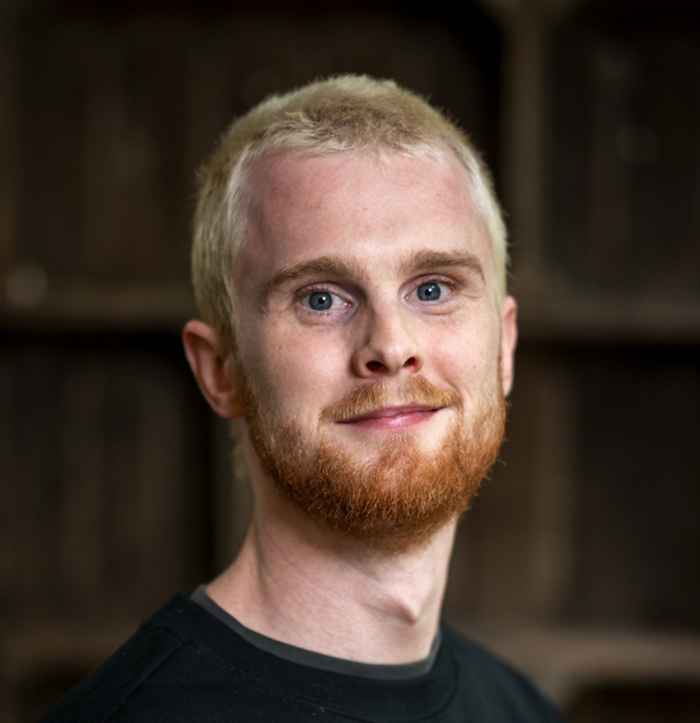
I started my PhD in 2020 at the Cognitive Psychology Unit at Leiden University, supervised by Prof. dr. Mariska Kret and Dr. Milica Nikolic. Broadly, my work focuses on children's socio-emotional development. I am interested in children's understanding of others' emotions and examine how emotional signals and cues - such as facial expressions, body language, and changes in physiology - inform the choices we make on a daily basis. I take an integrative approach to my research: combining physiological data with expert facial expression coding and behavioural economic paradigms. Recently, I have expanded my research line to examine the development of emotions in cross-cultural contexts. I am passionate about open science and ensuring the results of my work reach a wide audience.
-
Mark Rotteveel
Dr. Mark Rotteveel is an assistant professor working in the Social Psychology program at the Department of Psychology of the University of Amsterdam and he is associated editor of Cognition & Emotion. His research mainly concerns affective information processing and its behavioral consequences. Particularly, he is interested in affective information processing and its bi-directional relationship with action tendencies, attitudes, feelings, emotional expressions (e.g.,facial expressions, body posture) as well as information processing tendencies. Furthermore he is interested in cross-over phenomena of mood and affect with classic cognitive information processing (e.g., recognition performance). Recently, he started studying the perception of time in the context of emotion. In studying these processes specific latency measures, questionnaires as well as psychophysiological measures (e.g., fEMG, GSR, ERP, as fMRI) are used.
-
Anna Sach
Anna Aretha Sach is a PhD student at the University of Amsterdam. Her doctoral project is focused on understanding why people engage in climate activism. She studies emotions of climate activists and people new to climate activism. She is also interested in intersectionality, repression, and care in social movements. Her methods include among others qualitative interviews and Experience Sampling Methods / Ecological Momentary Assessment. Anna is dedicated to critical participatory action research and co-creation approaches. She is supervised by Dr Cameron Brick, Dr Disa Sauter and Dr Nils Jostmann.
-
Maien Sachisthal
Maien Sachisthal is a postdoctoral researcher in the Department of Social Psychology at the University of Amsterdam. In her work, she studies engagement with climate change, ranging from how certain beliefs may hinder engagement, and how we can get more people to engage with this societal issue. Her primary focus is on climate change conversations: How do such conversations unfold, and how can we get more people to talk about (their) climate change (concerns)?
-
Elisa Militaru
My research focuses on the psychology of places, investigating how the environment around us can shape our thoughts, feelings, and behaviours. I completed my PhD at the University of Cambridge, where I used geographical psychology methods to investigate how personality traits and emotions are shaped by, and respond to, properties of the physical environment at large spatial scales. I am currently a postdoctoral researcher at the Amsterdam Interdisciplinary Centre for Emotion, where my work concentrates on the contexts in which emotional expressions naturally occur.
-
Disa Sauter
Disa Sauter is an associate professor of social psychology at the Department of Experimental Psychology and tutorial fellow at Christ Church, University of Oxford, and an Associate Professor in the Department of Social Psychology at UvA. Her work examines emotion with a particular focus on the communication of emotions via non-verbal expressions. She studies vocalisations like laughter, cries and sighs, and also facial expressions of emotions. She is interested in how factors such as preparedness, culture, and learning shape our emotions and the ways that they are communicated. Her research makes use of a wide range of empirical approaches, including cross-cultural comparisons and computational methods. She has a particular interest in positive emotions, and in recent years, become increasingly interested in understanding emotions in relation to sustainability and pro-environmental behaviour.
-
Lidya Yurdum
I started my PhD at the University of Amsterdam in 2024 under the supervision of Dr. Disa Sauter and Dr. Sam Mehr (University of Auckland / Yale University). My research focuses on non-verbal vocalisations: from sighs and grunts, to laughter and squeals, I study how, when and why we make these sounds. Using citizen science methods (such as online gamified experiments), I research how similar people around the world are with regards to these basic human behaviours. Alongside non-verbal vocalisations, I am also interested in the behavioural and emotional functions of human song.
-
Beth Zhou
I am a PhD candidate supervised by Dr. Katharina Block, Dr. Michael Boiger, and Dr. Suzanne Oosterwijk. My research focuses on gendered emotion across cultures. In particular, I study how men and women differ in their emotional experiences, expressions, and emotion norms, and how these differences influence both professional and close relationships. More broadly, I examine how these dynamics connect to cultural and structural factors such as gender inequality. I am also interested in wider social issues, including social movements and extremism. Prior to starting my PhD, I completed a Research Master in Social and Health Psychology (cum laude) at Utrecht University.
-
Linli Zhou
Linli Zhou is a PhD candidate in the Department of Social Psychology at the University of Amsterdam. Her research focuses on the concept of "warm glow"—the positive feelings that arise from doing good—and its connection to pro-environmental behaviors. Under the supervision of Dr. Disa Sauter and Dr. Cameron Brick, Linli investigates whether individuals experience warm glow feelings after engaging in pro-environmental behaviors, even when such actions cost time and effort. Furthermore, her work explores whether this warm glow can encourage people to continue adopting pro-environmental behaviors in the future. Online consequential pro-environmental behavior tasks and behaviors such as clothing repairs have been explored in her projects.